
Ask ten business owners what “branding” means and you’ll get ten different answers — usually all describing the same thing: a logo. Then they pay a designer for that logo, put it on a signboard, and wonder why customers still can’t tell them apart from the shop next door. The money wasn’t wasted on the design. It was wasted on a misunderstanding: brand, branding, and brand identity are three different things, and buying one while needing another is one of the most common ways small businesses burn their marketing budget.
This article untangles the three in plain language — what each one is, how they connect, and what to actually do about each. If you’ve ever said “we need branding” without being sure what you meant, start here.
Key takeaway: Your brand is your reputation — what customers think and feel about you. Branding is everything you do to shape that reputation. Your brand identity is the visible system — logo, colours, typography, voice — that makes the branding recognisable. One is the result, one is the work, one is the toolkit.
1. Your Brand: The Reputation You Don’t Fully Control
Your brand is not your logo. It’s not your colour scheme, your tagline, or your Instagram bio. Your brand is what people think, feel, and say about your business when you’re not in the room.
Think of two bakeries on the same street in Lahore, selling nearly identical cakes at nearly identical prices. One has a queue every evening; the other is empty. The cakes didn’t cause that gap — the reputation did. Customers trust the busy one, expect quality from it, and recommend it to friends. That bundle of expectations and feelings is the brand.
Here’s the uncomfortable part: you don’t get to simply declare your brand. You earn it — or lose it — through every interaction a customer ever has with you. Your brand is the sum of:
- The quality of what you sell
- How you’re treated when something goes wrong
- What your shop, website, and packaging look like
- What other people say about you online and in person
- How consistent all of the above feels over time
A strong brand means customers choose you before comparing prices. A weak one means you’re interchangeable — and interchangeable businesses compete only on price, which is a race to the bottom.
2. Branding: The Work of Shaping That Reputation
If your brand is the reputation, branding is the deliberate work of building it. Branding is a verb — it’s everything you do, on purpose, to influence what people think and feel about your business.
That includes the obvious things: your advertising, your social media posts, your packaging, your shopfront. But it also includes the things most businesses never think of as branding:
- How quickly you reply on WhatsApp — and the tone of the reply
- Whether your delivery rider is polite
- Whether your website works properly on a phone
- How you handle a refund or a complaint
- Whether your prices are consistent everywhere they appear
Every one of those moments is a branding moment. A beautiful logo on a business that ignores customer messages is branding that contradicts itself — and contradiction is what kills trust. This is why branding can’t be outsourced to a designer alone: a designer can shape how you look, but only you can shape how you behave.
3. Brand Identity: The Visible System
This is the part most people mean when they say “branding” — and it’s actually the smallest of the three. Your brand identity is the visible, tangible system that expresses your brand: the logo, the colours, the typography, the imagery style, the packaging, and the tone of voice in your writing.
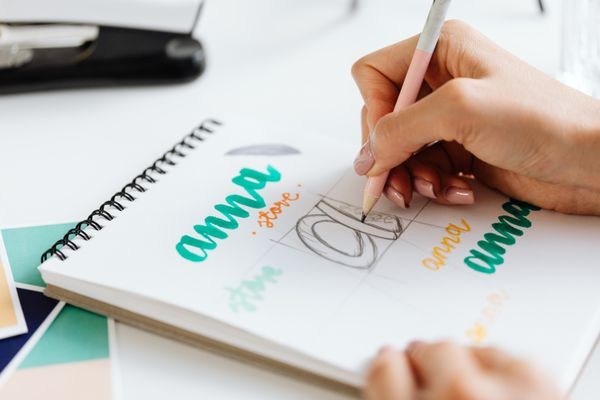
Think of it as a uniform. A uniform doesn’t make someone professional — their behaviour does — but it makes them recognisable, and it signals what to expect. That’s exactly what a brand identity does for a business. When it’s done well:
- Logo: one clear mark, usable at every size from a favicon to a signboard
- Colours: a small, fixed palette used the same way everywhere
- Typography: one or two typefaces, not a different font on every flyer
- Imagery: a consistent style of photos and graphics
- Voice: the way you write — formal or friendly, in English, Urdu, or both — kept consistent
The critical word is system. A logo file sitting alone on a designer’s hard drive is not an identity. An identity is the logo plus the rules for using it — where it goes, what surrounds it, what never changes. That’s what makes a business look like the same business on its signboard, its Facebook page, its packaging, and its invoices. (We go deeper on building this in Why Your Business Needs More Than Just a Logo.)
How the Three Connect
One sentence ties it all together:
Branding is the work, brand identity is the uniform you wear while doing it, and your brand is the reputation that results.
A sharper way to remember it: you do branding, you own an identity, and you earn a brand. Mix up the order and things go wrong — which is exactly what happens to most businesses.
The Three Expensive Mistakes
Mistake 1: Buying a logo and calling it a brand. This is the classic. A new business pays for a logo, puts it everywhere, and expects customers to suddenly trust and remember them. But a logo is one ingredient of an identity, and an identity is one input into a brand. The logo didn’t fail — it was asked to do a job it was never designed for.
Mistake 2: Branding that contradicts the experience. The café with a premium-looking Instagram feed and rude counter staff. The “we care about customers” slogan on a website with no working contact number. When what you show and what you deliver don’t match, customers believe the delivery, not the design — and the gap actively damages the brand. Consistency between promise and experience is the whole game.
Mistake 3: An identity that changes every season. New logo this year, different colours next year, a third font on the new flyers. Every change resets recognition to zero. Customers can’t remember what keeps changing. Pick the system, document it, and then have the discipline to use it the same way for years. Boring consistency beats exciting reinvention — every time.
What to Do, in the Right Order
If you’re starting from scratch — or fixing a muddle — work in this order. It saves money because each step makes the next one cheaper.
Step 1: Clarify the brand you want to earn. Before any design work, answer three questions in writing: who exactly is this for, what do we promise them, and why should they believe us over the alternative? If you can’t answer these, no designer can save you — this is strategy, and it’s your job as the owner. One page of honest answers beats a fifty-page brand book built on guesses.
Step 2: Build the identity system once, properly. Logo, colours, typography, imagery style, voice — designed together, documented in a simple one-or two-page guideline sheet that anyone making a post or a flyer can follow. This is the right moment to hire a professional: a proper identity system is a one-time investment that pays off every single day you use it. Our Branding & Creative work starts exactly here.
Step 3: Do the branding, consistently, everywhere. Now the daily work begins: every post, every reply, every package, every interaction follows the system and delivers on the promise. This is where most businesses quietly quit — not because it’s hard, but because it’s repetitive. But repetition is the mechanism. A brand is built the way a reputation is built: the same good behaviour, over and over, until people start expecting it.
When to Get Help
You can do Step 1 yourself — nobody knows your customers better than you do. Step 2 is usually worth professional help: a proper identity system designed once is cheaper than three rounds of “just a quick logo.” And Step 3 is where agencies earn their keep — keeping the system alive across social media, advertising, and your website month after month without it drifting.
If you’d rather have the whole chain built properly — the strategy, the identity system, and the ongoing branding that keeps it consistent — start a project with us. We’ll begin with what your brand needs to earn, and build everything else on top of that.